
RENOBENCH / PLANNING GUIDE
Measure once.
Understand every quantity.
Floor area, extra material, carton count, and purchased coverage are related numbers. They are not interchangeable. Keeping them separate makes a flooring budget easier to check.
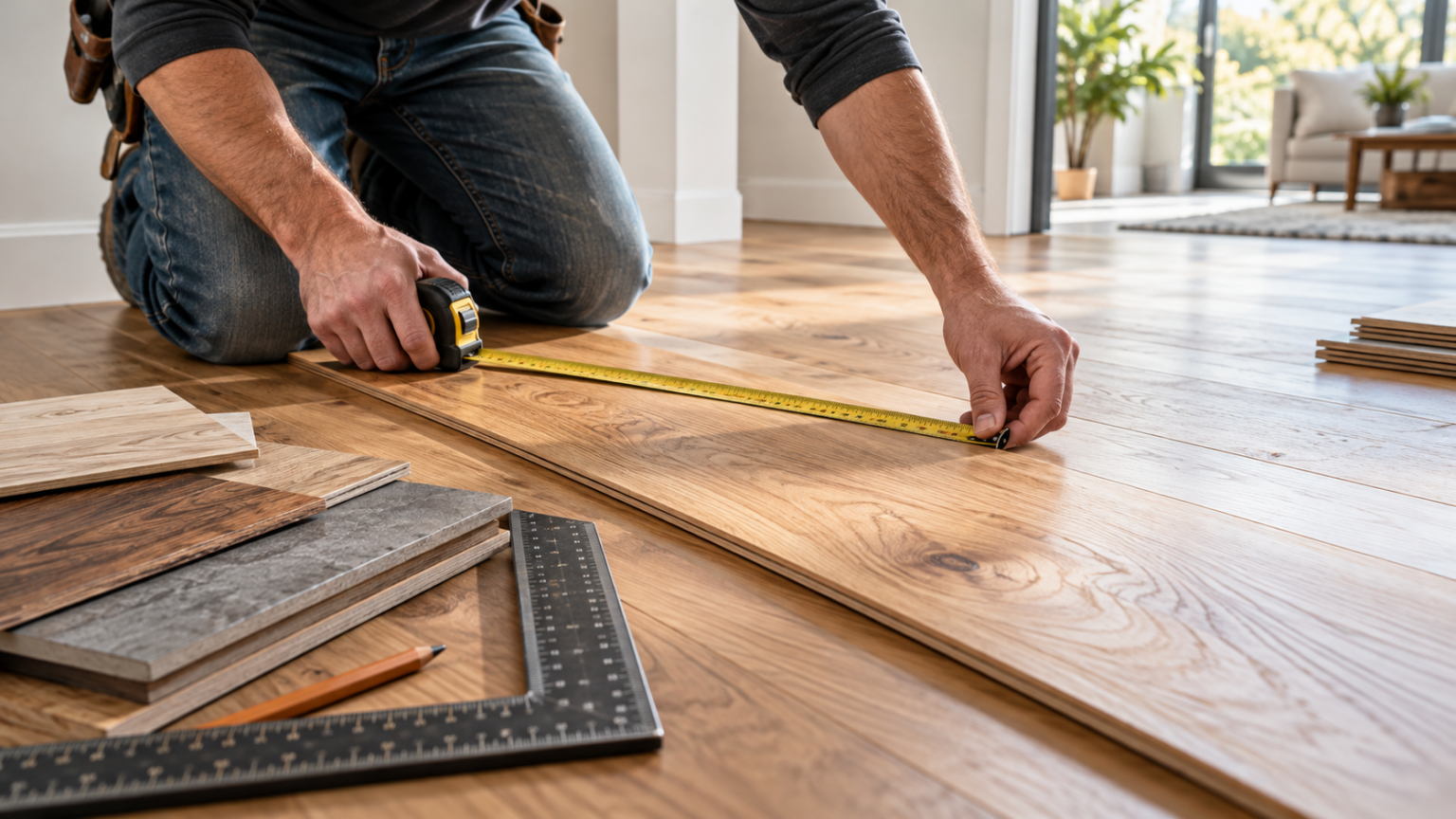
THE SHORT ANSWER
For a rectangular floor, area equals length × width. Multiply that area by one plus your extra-material percentage, divide by carton coverage, and round up to whole cartons. Tile purchase cost is carton count × carton price. Confirm the actual layout and product requirements before buying.
Use one measurement system throughout.
RenoBench’s flooring worksheet uses feet and square feet. Enter 8 feet 6 inches as 8.5 feet, not 8.6. Convert inches to a fraction of a foot by dividing them by 12.
Check the room’s shape before using length × width. For irregular spaces, break the plan into appropriate rectangles and keep notes on overlaps or areas you exclude. The current tool calculates a single rectangle; it does not interpret a floor plan.
A complete quantity example.
| Calculation | Result |
|---|---|
| Room length × width | 10 ft × 8 ft = 80 sq ft |
| Chosen extra-material allowance | 80 × 10% = 8 sq ft |
| Quantity target | 80 + 8 = 88 sq ft |
| Coverage stated per carton | 15.5 sq ft |
| Cartons, rounded up | 88 ÷ 15.5 → 6 cartons |
| Purchased coverage | 6 × 15.5 = 93 sq ft |
Round the purchase, not the room.
Buyable packaging is why six cartons can provide more than the 88-square-foot target. Do not round the room area down to make the carton count smaller. Use the product’s stated coverage and verify that the units match.
Purchased coverage is a material quantity. Floor installation in the RenoBench worksheet uses the measured floor area, without the extra tile allowance. Confirm how your installer actually defines and charges for the work.
Add what is not inside the carton price.
Underlayment or waterproofing materials, mortar, grout, trim, delivery, demolition, disposal, and preparation may need separate amounts. Some quotes already include several of these items, so check inclusions before adding them.
The current worksheet is designed for tile sold by the carton. It does not calculate carpet roll layout, stair treads, wall tile, or every other flooring format. Product-specific installation instructions and a qualified assessment take precedence over a generic quantity worksheet.
Turn quantities into a price only after selecting the product.
If six cartons have a fictional price of $62 each, the tile purchase cost is $372. That is an arithmetic example, not a retail price reference. Replace it with your supplier’s current price for the selected product.
Check tax, shipping, return terms, carton coverage, and availability before committing. Keep the selected product and quote date with your own project records.
PRACTICAL QUESTIONS
A few useful clarifications.
Is the extra-material percentage always 10%?
No. Ten percent is used in the example to explain the calculation. Layout, cutting, product requirements, and purchasing decisions can change the amount you choose.
Can I subtract fixture footprints automatically?
The current calculator does not interpret fixtures or decide which areas need flooring. Confirm the actual installation scope, then enter measurements appropriate to it.
Why is installation area different from purchased coverage?
Extra material and whole-carton rounding increase the amount purchased. They do not automatically increase the measured floor area used by the worksheet’s labor calculation.
Keep planning with RenoBench.
Prepared by RenoBench. Content revision: October 22, 2026. Examples are illustrative; prices and property-specific requirements must be checked separately.
Planning worksheet. Confirm scope and costs with your contractor.